
After taking a year off from hosting, Alan and I headed back to Arches National Park in late August. We find it an ideal place to be campground hosts – within a day’s drive from home, just enough to do to keep us busy without being overwhelming, fabulous scenery, plenty of places to visit in the park and in the surrounding area. Oh, and a full-service grocery store with fresh fruit and veggies less than an hour away!
Just a few minutes from our trailer site is a loop trail that is perfect for stretching one’s legs, doing a little trash patrol and climbing through an arch.

Hmm…I guess you’ll have to imagine the arch. The next photo is Skyline Arch as seen from the amphitheatre in the campground.

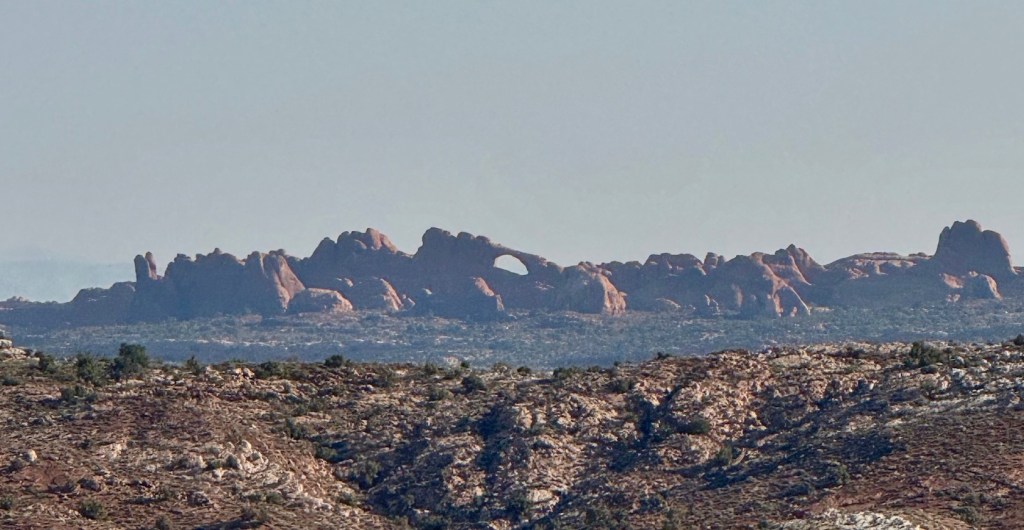
This is the other side of Skyline Arch from several miles away.
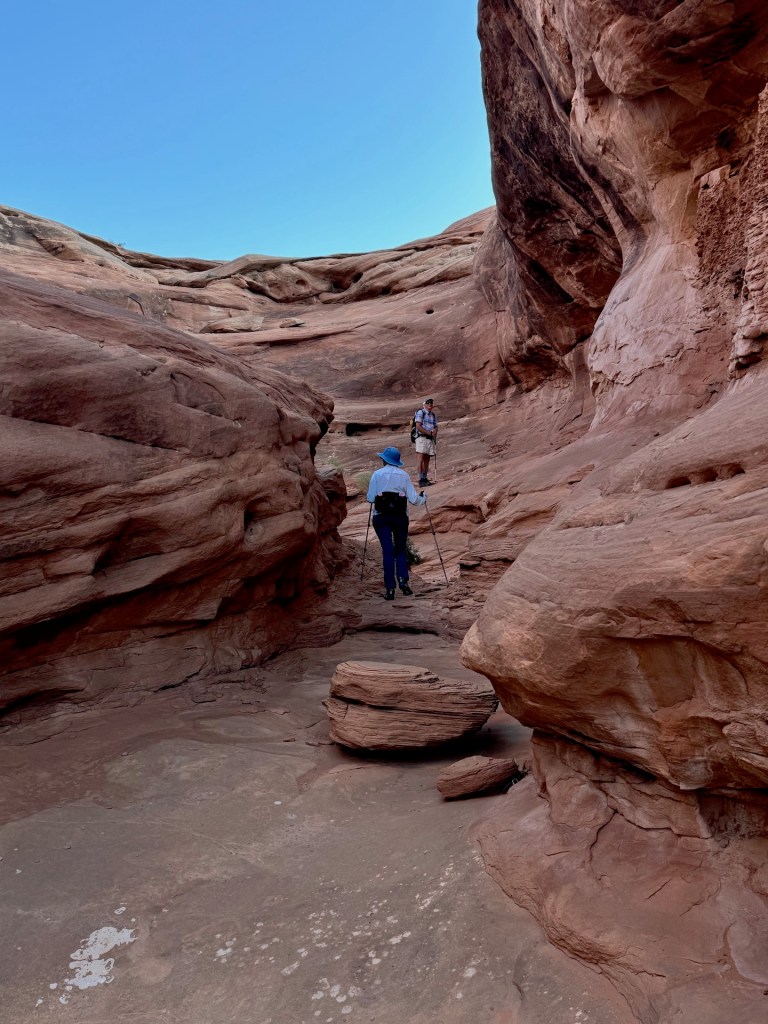
As on earlier trips to Arches, one of Alan’s friends from college guided us to places most visitors don’t have time to explore. Unfortunately, it was so hot that most of our hikes were rather short. Perhaps we didn’t get as much exercise as we would have liked, but we still discovered beautiful rock formations and interesting artifacts.
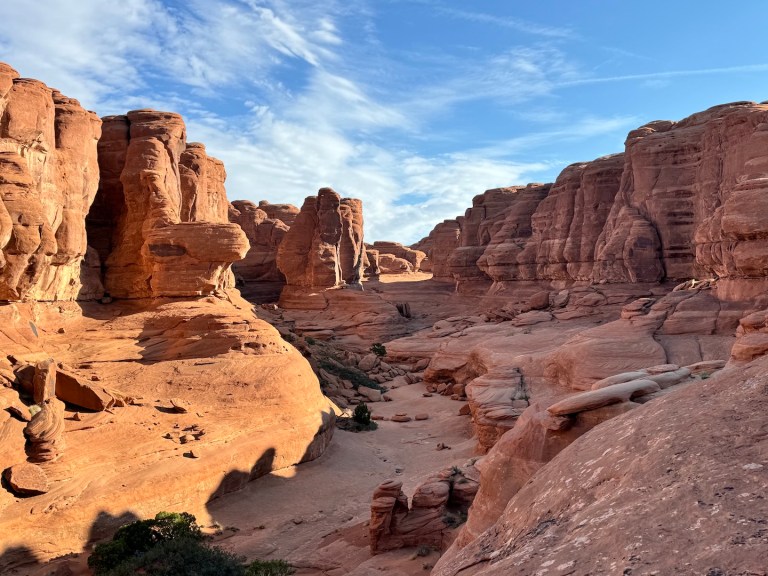
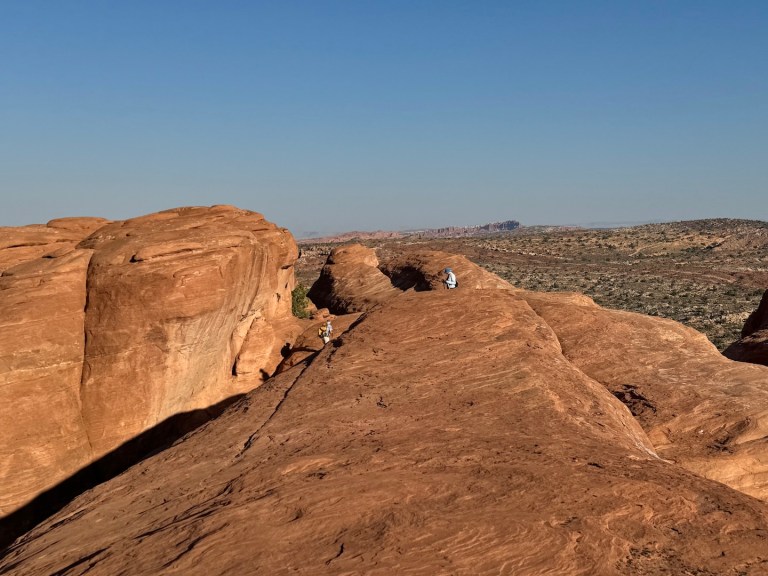
One could spend weeks climbing around these rocks. We only had a couple of mornings to do so.
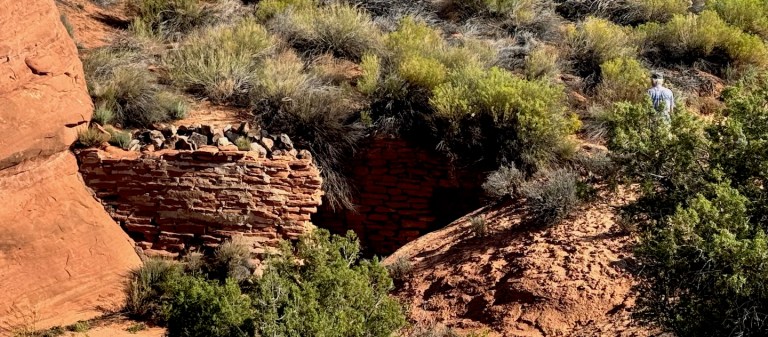
The people that lived on this land before it became a national park left evidence of their presence. We were told that men in the CCC (Civilian Conservation Corps) built the dam. It’s hard to see in the photo, but it is a double-walled dam filled with bentonite. That clay probably had to be hauled a couple of miles to the dam site.
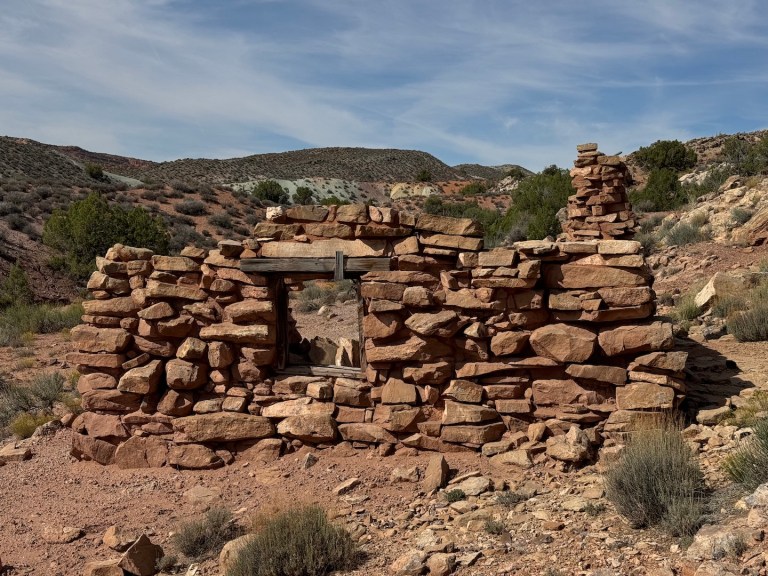
We don’t know who built the house, but their dump consisted of hundreds of rusty tin cans.
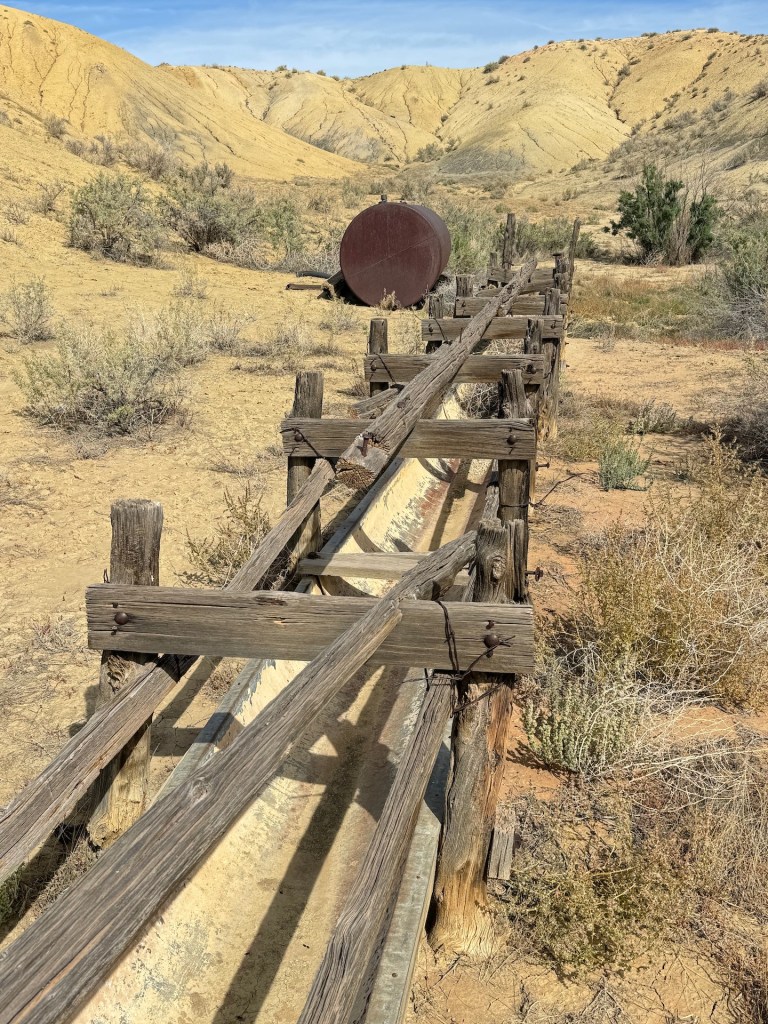
And this sluice? No idea – water for livestock? for mining?
By around 1300 CE, Native Americans had moved on from the area that would become Arches National Park. While they were here, they used agate to create tools.

We occasionally explored beyond Arches. Here we are hunting for potholes, or ephemeral pools, in Canyonlands National Park. Under the right conditions, they are full of life – shrimp and snails, insects, invertebrates and amphibians. They also attract birds and mammals in an environment that has little water.


Sego Canyon, just north of Arches on BLM (Bureau of Land Management) land, contains three panels of pictographs and petroglyphs created over thousands of years by three distinct cultures – Barrier Canyon, Fremont and Ute.


A coal seam runs through the ghost town of Sego, up the road a bit from the rock art. In the first half of the 20th century, coal was mined here and then sent about five miles via a spur rail to the Denver & Rio Grand Western Railroad at Thompson Springs. We found log cabins and one dugout, but this structure was by far the largest.

Neither of us had ever been to Natural Bridges National Monument. Leaving the trailer behind, we grabbed our tent and sleeping bags and headed south. Natural Bridges is the only national monument totally off the grid and it also has the distinction of being the first International Dark Sky Park. Naturally, we had to explore the natural bridges in the park.
Owachomo is the oldest bridge. You can see how thin the span is.


Kachina is the youngest bridge and is still rather sturdy.

Sipapu is the highest bridge and also has the greatest span. The trail down to the bridge is the most interesting of the three. Going down…

The rock shelf in the lower left corner gave us a place to rest the down muscles and snap a few photos. Do you see the people way below us?

Still going down…

We’re finally at the bottom and looking up at the bridge.

Before we arrived in August, Arches had a substantial amount of rain. Several of our campsites in the loop at the end of road had lakefront property and the road itself was covered in sand. Then…nothing. It would threaten rain, but we’d get only a few drops. We found the dried mud rather photogenic.
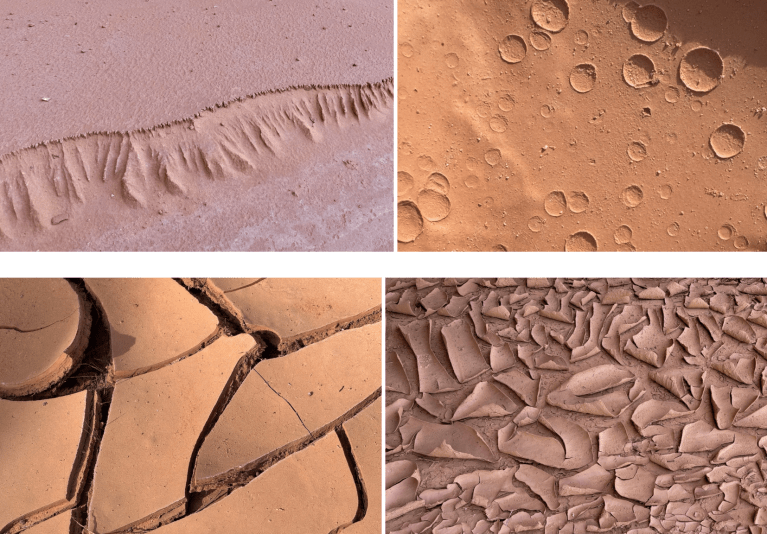
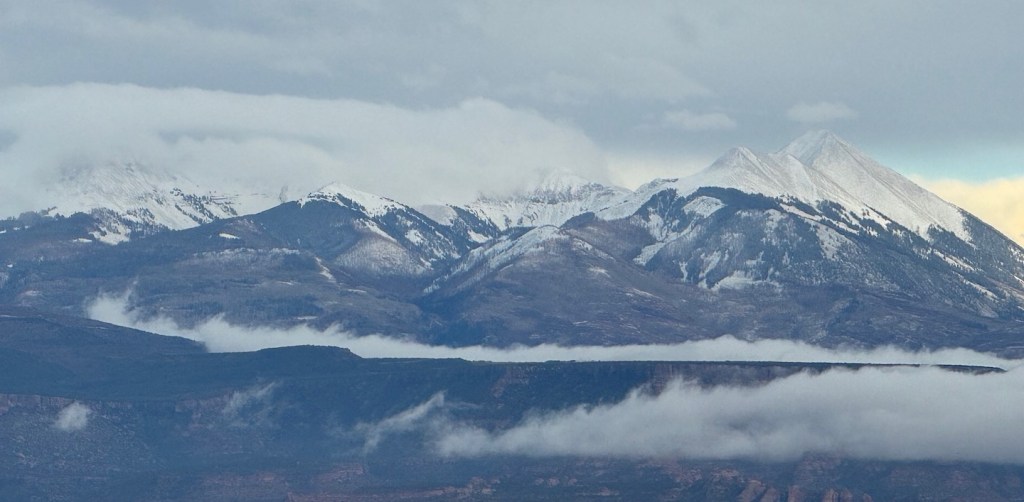
Finally, in mid-October we got another storm. By this time it was cold enough in the La Sal Mountains that they received snow.
As always, there were a few unexpected events. At least one camper now knows to always set the parking brake before exiting the vehicle!


Fortunately, no great harm was done to people, the vehicle or the environment. Alan and I spent about an hour filling in the ruts, and a couple of wind storms later, it was impossible to see where the damage had been.


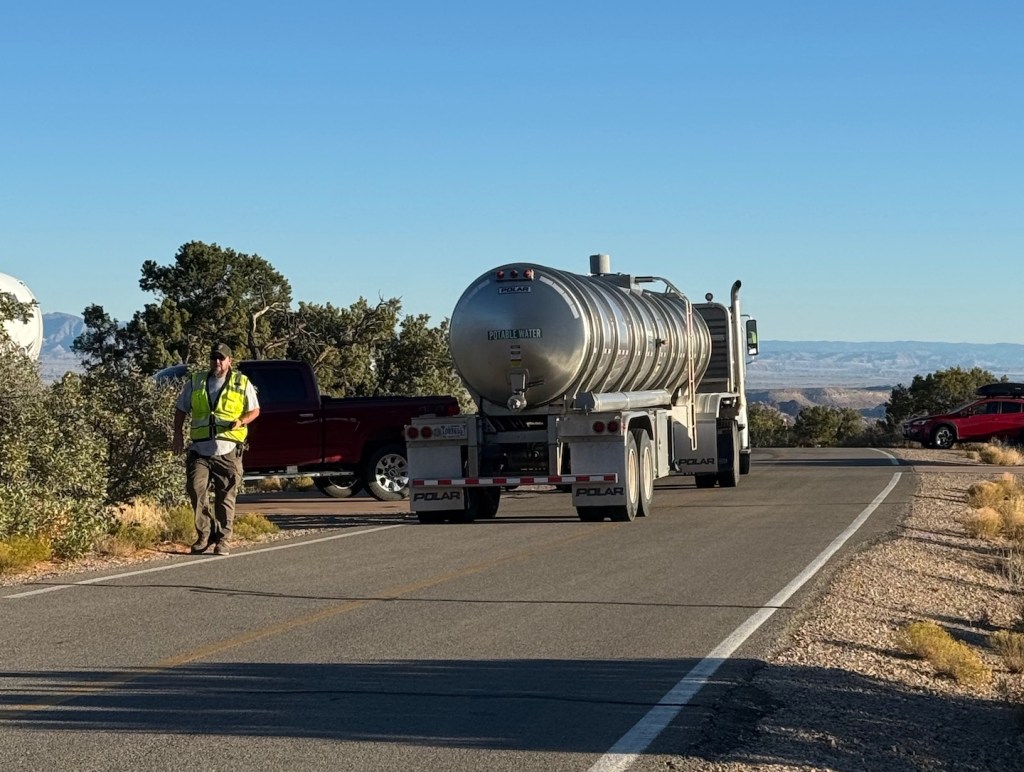
Water is available in only two locations in Arches – the visitor center at the entrance to the park and Devil’s Garden at the end of the road. The water in Devil’s Garden is pumped from a very deep well into a water tank at the highest point in the campground and then fed to the comfort stations. Every four years the tank is cleaned and inspected for leaks. That (for reasons unknown) requires a full tank. First the generator for the pump broke. Then the pump itself broke. As the divers were already scheduled, water had to be trucked in. And the trucks were too long to navigate the loop at the end of the road so they backed into the campground and up the hill to the water tank!
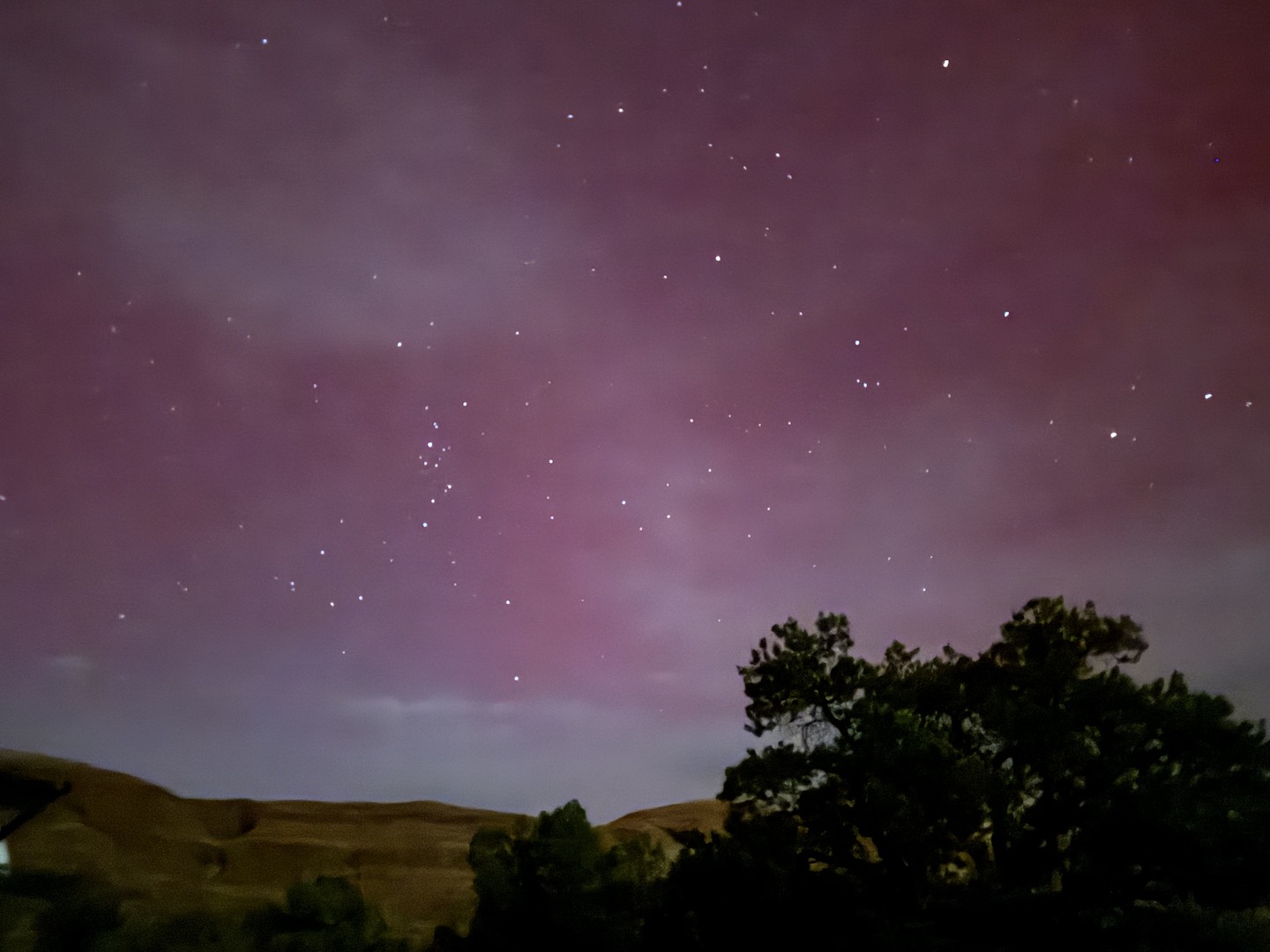
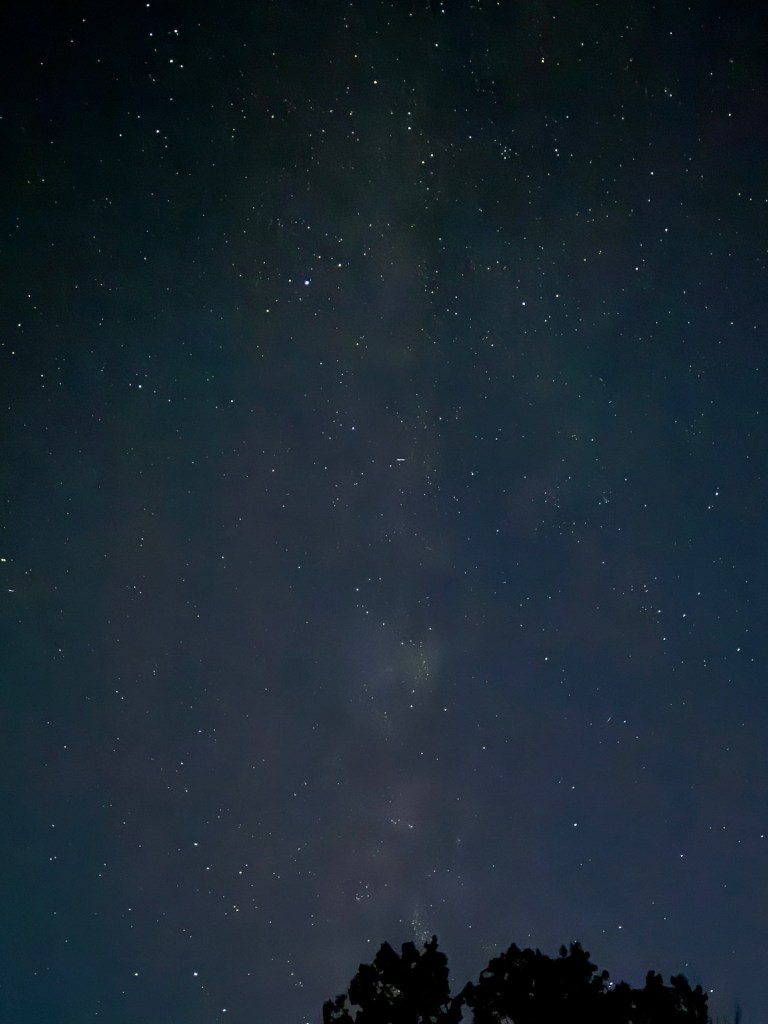
Arches National Park and Natural Bridges National Monument are both fantastic places to see celestial events. We were fortunate to see both the Aurora Borealis and Comet Tsuchinshan–ATLAS along with sunsets and the Milky Way.


Nine weeks after heading to Arches, we were back home. Timing is everything! Had we been 24 hours later a snowstorm in the Colorado high country would have made for a very tense drive.
Velocity is almost 10 years old, and we estimate we’ve spent over two years living in her. We installed a new refrigerator this past year and were quite pleased to find it keeps ice cream frozen. More upgrades and repairs are in the planning stages. And more trips! First up is Big Bend in February of 2025 for an actual vacation, not hosting. Perhaps we’ll follow that with a trip further west next fall. We haven’t decided about where or when to host next. Stay tuned!
 velocityhitstheroad