
First, a disclaimer: Velocity did not hit the road on this trip. We thought about it but decided it made more sense to drive the Honda to Arizona and back.
We started the process almost two years before the actual trip. There are many types of trips and many companies that offer trips. We knew we wanted to be on the river as long as possible, to go in May to maximize daylight without maximizing temperatures, to be in non-motorized boats, and to do plenty of hiking. We found the perfect trip for us: 16 days on the river, late April to mid-May, five oar boats and one paddle boat, and opportunities to hike most days.
So here we are at Lee’s Ferry, many months later, ready to start our adventure.

Six guides, eighteen paying guests and one hybrid. One of Alan’s friends from college spent many years guiding trips in the Grand Canyon for the company we had chosen. He has since retired and made arrangements to join us for the trip. We knew one other person in advance – a friend from Dallas. Most of us were from the western United States, primarily from Colorado and Montana, and interestingly, most of us were somewhere in our sixties.
We had 16 days to travel from Lee’s Ferry at Mile 0 (about 15 miles downstream from Glen Canyon Dam) to Diamond Creek just above Mile 226. Because of the dam, the level of the Colorado River is fairly constant, fluctuating between 18,000 and 24,000 cfs based upon the amount power needing to be generated. Many side canyons contribute various amounts of water as do occasional flash floods, but it takes an extraordinary event to cause flooding.
However, side canyons are crucial for other reasons. These breaks in the Canyon walls provide hiking opportunities. And most campsites are located near side canyons as well because that’s where the sand and rocks are deposited. It is these deposits that form those famous rapids. Unfortunately we don’t have any photos of wild rides through the rapids because our camera is not waterproof, and our first priority was staying in the boat. Plenty of video is available on YouTube of other rafters bouncing down rapids. Lava Falls is frequently the largest rapid and certainly has the worst reputation.
A typical day started at 5:30 am with a blow of the conch shell. Coffee, hot water for tea, fruit and granola were ready. At 6:00 we heard the conch again announcing a full breakfast which might be eggs and sausage, pancakes and bacon, bagels with everything…No shortage of food on this trip.
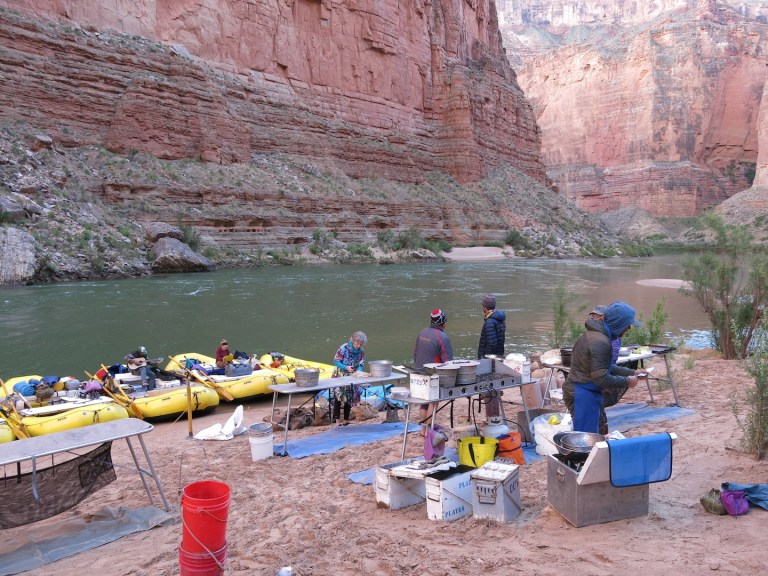
Normal kitchen setup (see below) consisted of 4 tables – food prep, stoves, serving and dishwashing. Note the rugs under the tables to catch food scraps. We tried hard to leave no trace. The stacked orange buckets (with a faucet if you look closely) serve as a hand washing station – filtered water in the bottom bucket is pumped through the faucet and used water collects in the top bucket. The dishwashing table had 4 buckets (only 2 shown in photo below) – cold pre-rinse, hot wash with soap, hot rinse and cold rinse with bleach.
Packing came next: personal gear, sleeping gear, food, filtered water, the kitchen, the toilet, lots of buckets (more on that later), all waste (including human), and finally, all of us. Everything had to fit into our six boats. Each boat had a guide; the paddle boat required six paddlers but carried no gear except items for day use; sometimes one or two people chose to paddle a “ducky” (inflatable kayak); everyone else hopped into an oar boat.
Generally we were on the water by 8:30. Then we floated down the river, ran rapids, hiked and learned about the Canyon. History, archeology, plants, animals, geology – our guides knew it all and loved sharing their knowledge with us. Most days we stopped for sandwiches or salads that our guides made on the spot, but occasionally we would pack lunches after breakfast had been cleared so that we could do longer hikes.
Four oar boats with people weighed about 1500 pounds each; the fifth (the one with most of the food and kitchen gear) weighed closer to 2000 pounds. And those buckets? Twenty five people need a lot of water – drinking, washing hands and dishes, food prep. Green buckets were filled with river water and sat overnight. In the morning after sand had settled to the bottom, water (minus the sand) was poured into blue buckets and pumped through a filter and into jerry cans. The jerry cans were packed into the boats and contributed considerable weight.
loaded rafts


green buckets, oar boat and paddle boat on the river
When we stopped for the night, almost never later than 4:30 pm, everything came off the boats. Although our guides packed and unpacked their own boats, we set up a bag line (think bucket brigade) and passed items up to high ground (or back down to the boats in the mornings). Then while our guides set up the kitchen and toilet areas, we found places to sleep – setting up tents or not, as the weather and personal preference dictated.
A blow of the conch shell at 5:30 pm let us know that appetizers were ready – cheese & crackers, hummus & veggies, chips with salsa and guacamole. By this time, most of us had grabbed a chair along with our appetizers and drinks so we chatted until dinner was announced. Over the course of the trip we enjoyed steak, salmon, fajitas, stirfrys, pasta dishes, chili, posole…As I said before, no shortage of food! Most the desserts came out of the dutch oven – giant chocolate chip cookies, brownies and lots of cakes.
Some campsites were small like this one; others were quite large.
Note people on chairs between boats and tents.

Somewhere between dinner and dessert, our trip leader would tell us about the plans for the next day. And I do mean plans; we had to be flexible and willing to work around other groups and the weather. By 8:30 most people headed for bed, lights out by 9:00 pm so we could wake up around 5:00 am to do it all over again.
And this is why:
Cute critters
frog on left is about an inch from head to tail
chuckwalla (a lizard related to iguanas) is almost a foot head to tail


Beautiful blooming cacti
left to right: barrel, prickly pear, fishhook


Glorious hikes throughout the Canyon


It’s a long way up to the granaries.


As all hikes start at river level, we always went up, sometimes a little, sometimes a lot. And occasionally we waded through water. Lots of snow last winter meant plenty of water coming into the side canyons this spring. Creeks and pools were full and waterfalls were flowing.
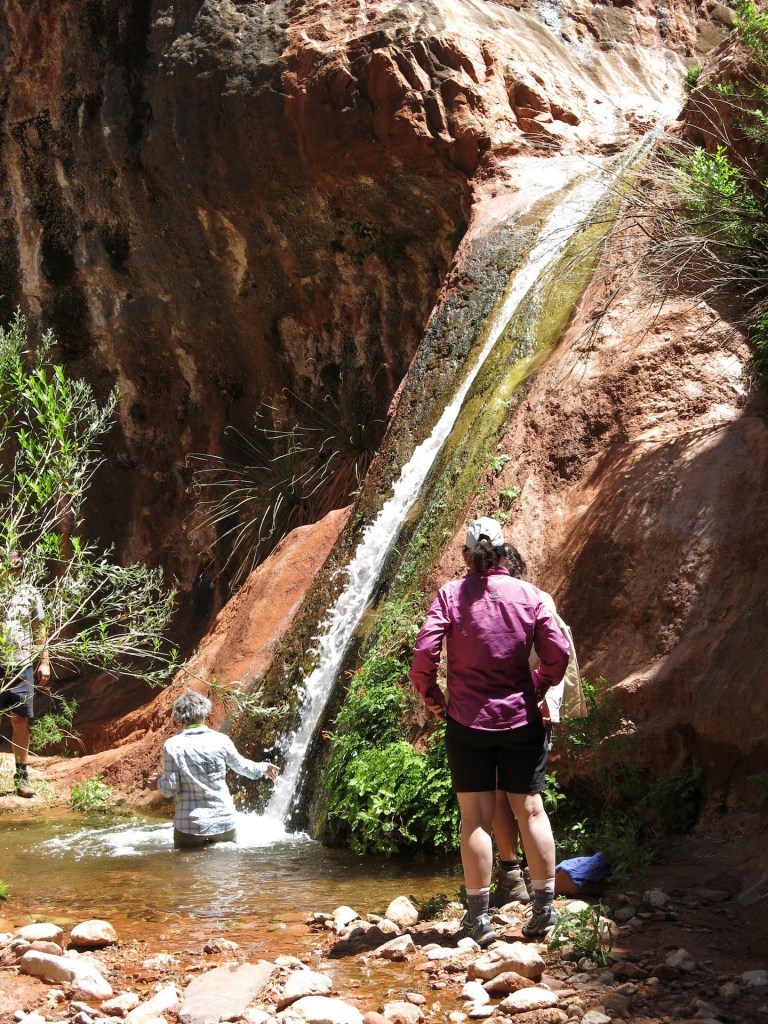
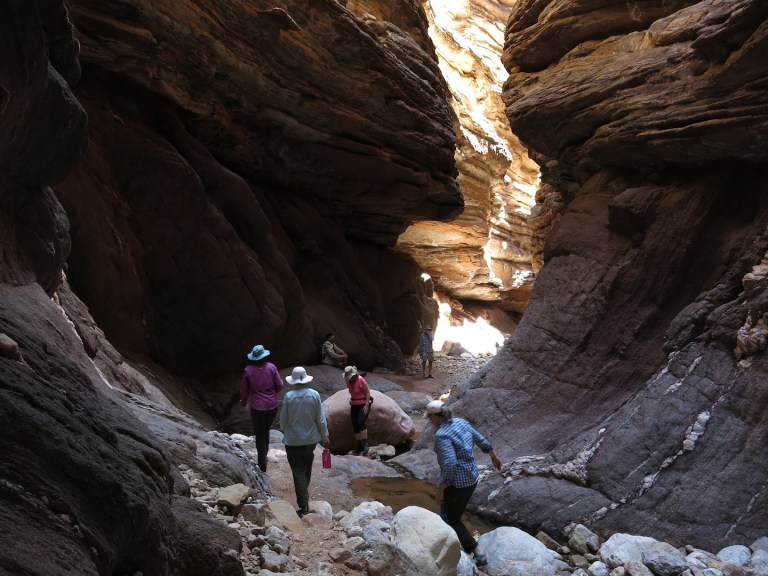


Fabulous scenery.
We’ve talked about rafting the Grand Canyon for decades.
It was worth every moment and every penny.

pool in side canyon

Room for several groups in this cavern to stop for lunch, play frisbee and set up a volleyball court, all at the same time.

This waterfall is also accessible from the top of the Canyon, but ropes are needed.

This could be the narrowest place in the Canyon at 76 feet across.
Average width is 300 feet.

Thunderstorm at 6:30 am followed by a flash flood about an hour later.

The Great Unconformity
1.2 billion years of missing rock between the Tapeats Sandstone (550 million years old) on top and the Vishnu Schist (1.7 billions years old) below.
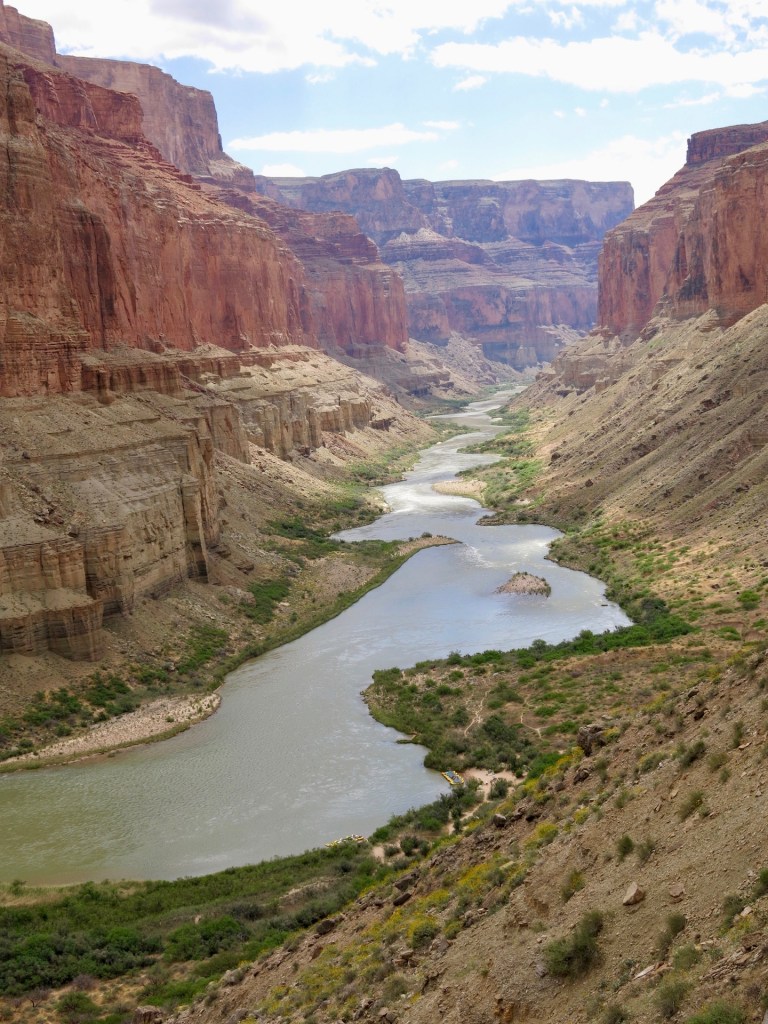
For a sense of scale, look for two groups of rafts, river right, near the bottom of the photo.

 velocityhitstheroad