Spring Break in Big Bend = 15-hour days for camp hosts. About half the campsites are reservable and the rest are first-come, first-served. Would-be campers generally arrived hours before sunrise, hoping for a site for the night. Of course, the current campers were still sleeping. Rather than letting newcomers drive endlessly through the campground in the dark, we put out traffic cones at 6:30 am and lined vehicles up at the entrance, letting them in as the current campers either departed or let us know that they would be departing. A few days we called in full for the day the night before because we had so little turnover. Our last drive through the campground was typically around 8:30-9:00 pm, but occasionally there were surprises that kept us up later: the wrong campers in a reserved site, missing hikers, fire and flame.
We’ve now gotten through the Texas spring break week and Easter weekend, but we continue fill up almost daily. As the temperatures rise, everyone prefers to camp up here in the mountains. Looking ahead on recreation.gov we can see that most sites in our campground are reserved through the end of May at which time the entire campground is first-come, first-served.
We’ve been invited to participate in some unusual undertakings such as graffiti removal and shuttling river runners. The shuttle didn’t happen, but the graffiti removal did and involved a product called Elephant Snot. And yes, it looks just as disgusting as it sounds – a greenish-gray gelatinous substance that is painted on, wiped off, and then sprayed off with water. In our case, mules packed down a gasoline-powered pressure washer which made the final phase much easier. And just in case you were wondering, the Snot does a great job if lifting off spray paint and is environmentally friendly.
Early in March we toured the wastewater treatment plant which is located near our campground. We had been told to send birders down past the plant because birds love the area where fresh water is discharged. We were more interested in the plant itself.
Driving down reminded me of that old Honda Pilot commercial. Driving through the gate we were on a paved road with plenty of visibility. Around the first bend the road narrowed and we could see trees ahead. Around the following bend, trees crowded the edge of the road which had turned to dirt. Then we were practically on a four-wheel-drive road full of rocks. Alan asked if we had made a wrong turn. And then the trees disappeared, we drove through another gate, and we were at the plant.
All the fresh water used in The Basin comes from a spring fed by rainfall which slowly percolates through the mountains. Using a very large pump, water is moved uphill to a half-million gallon storage tank. Then, as water is used waste water moves downhill to the treatment plant. The basic recipe there seems to be start with waste water, add bacteria, bubble it like an aquarium for a few days, let it settle, pour out the clean water into the wetlands, dry the resulting sludge and cart it off to the landfill. Some of the more interesting items found in with the waste water: eyeglasses, a dollar bill, pill bottles and small plastic toys.
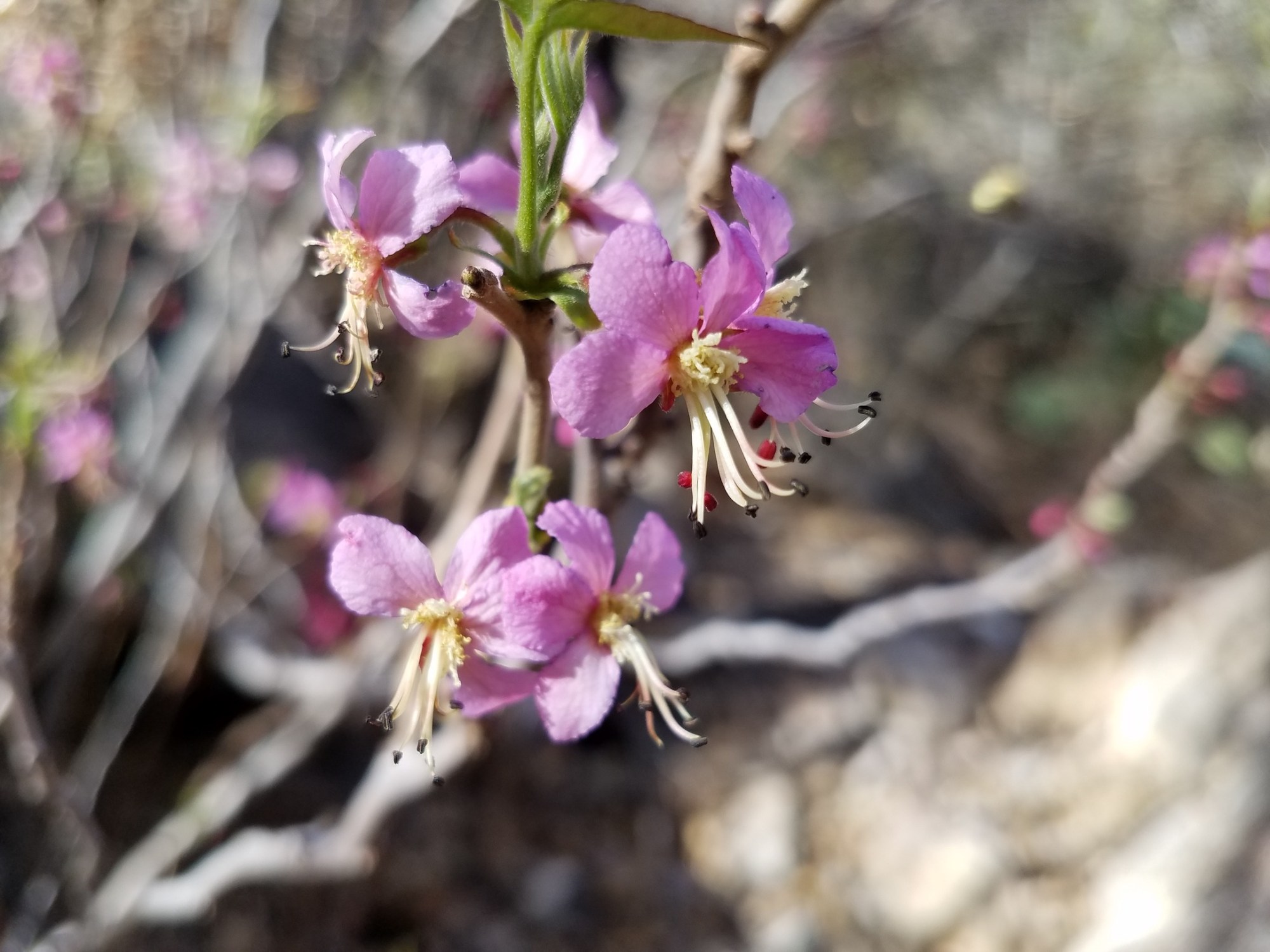
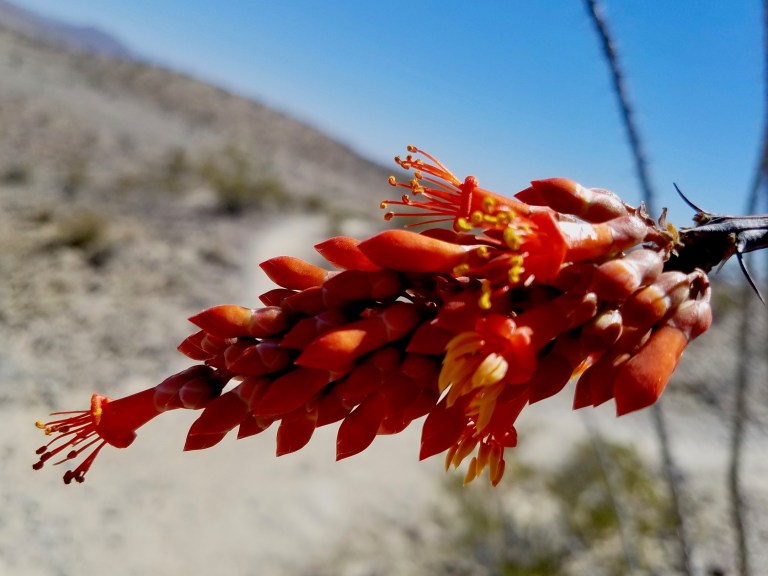
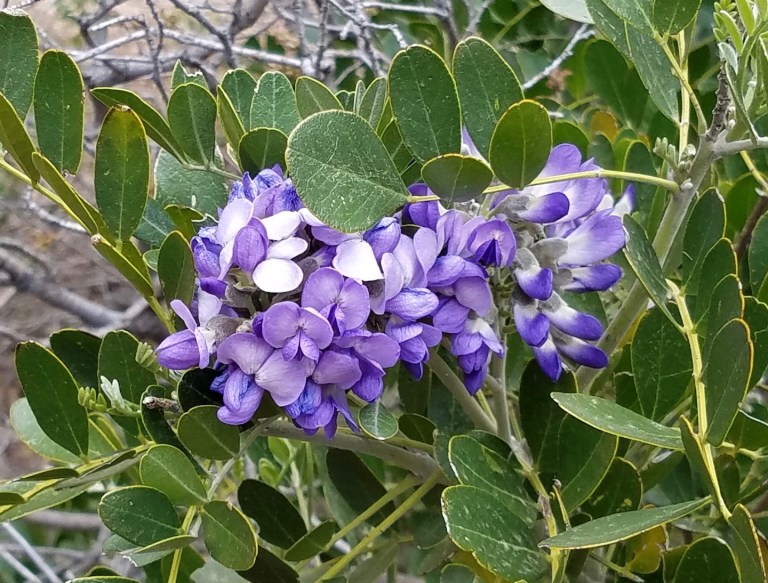
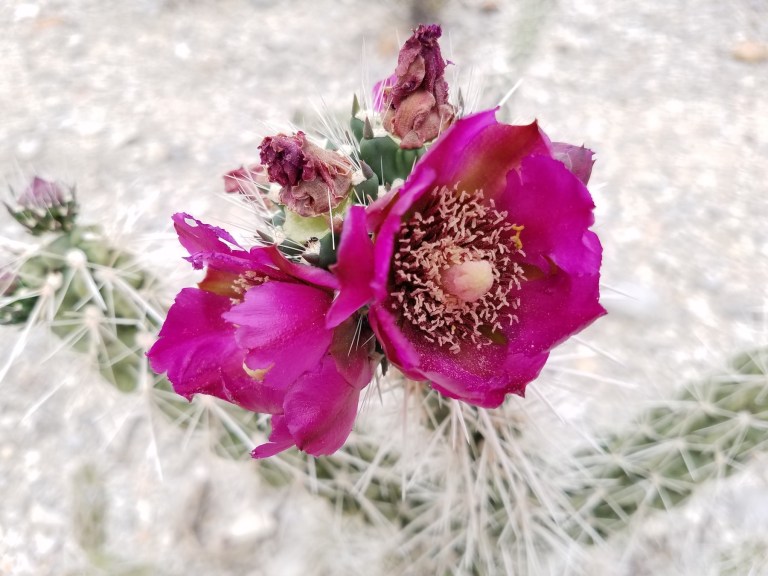
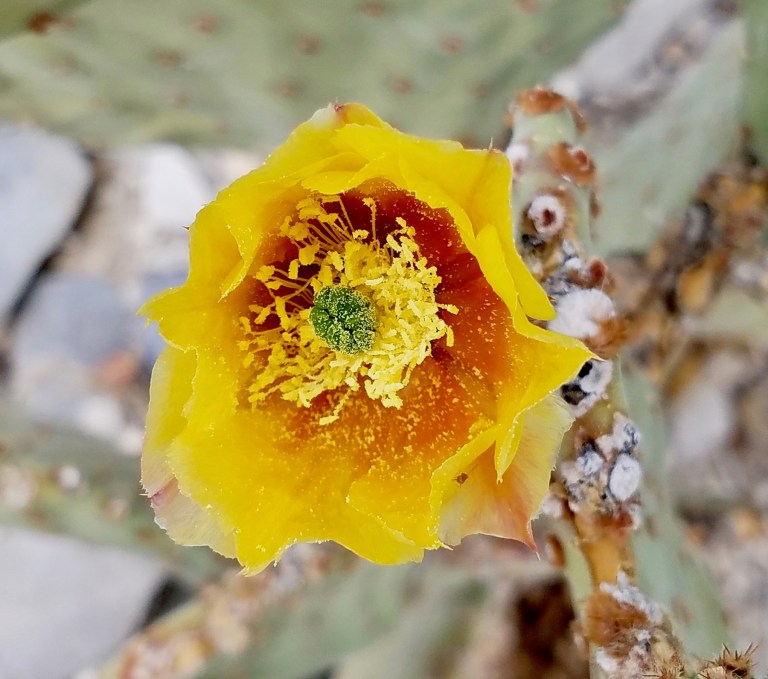
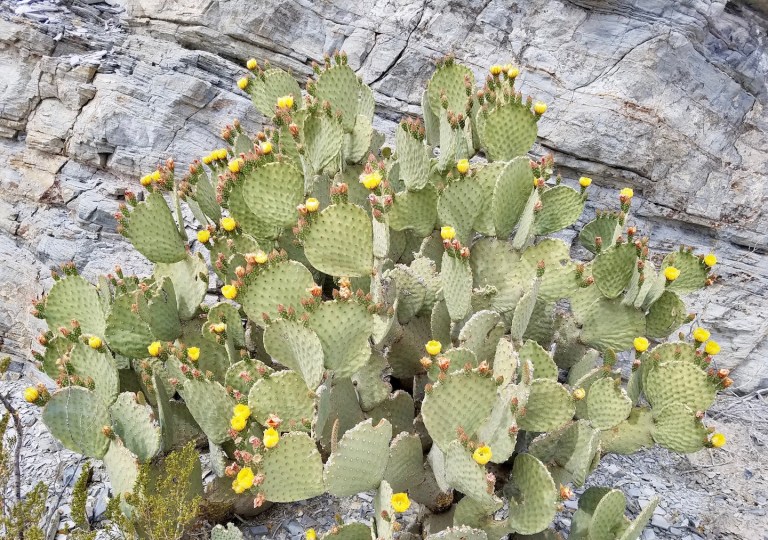
OK, time for photos. The best part of spring (which I mostly missed last time) is everything turning green and/or flowering. The photo at the top of this post is Mexican Buckeye. From top to bottom below: ocotillo flower, mountain laurel flower, cholla flower, prickly pear flower, prickly pear plant in bloom.
 velocityhitstheroad